 Email: support@vespaagogo.com

Cultural Insights
Islam in Vietnam: Distinct from the Rest of the World
2025-12-10
If you’ve explored Vietnam before, you probably already know about Buddhist pagodas and Catholic cathedrals. But Islam in Vietnam? Yup-it’s here, it’s unique, and it comes with centuries of history, colorful traditions, and super welcoming communities. Whether you’re a Muslim traveler looking for halal options or just a curious explorer who loves diving into lesser-known culture, this guide will walk you through the basics in the chillest, easiest way possible.
How many Muslim in Vietnam
According to Pew, Vietnam had around 160,000 Muslims in 2010, making up about 0.2% of the population. Around 70% belong to the Bani Islam community, while only about 30% follow mainstream (Sunni) Islam. This number is expected to increase to around 190,000 by 2030. Although the community is small compared to Catholics or Buddhists, it remains vibrant and visible, with more than 90 mosques across the country.
How Islam Arrived in Vietnam
Most people don’t expect Islam to show up in a country shaped heavily by Buddhism and Confucianism - but Islam actually arrived early.
Centuries ago, Muslim traders sailed from the Middle East, India, Persia, and Malaysia, cruising along Southeast Asian routes. By the 10th-11th century, many docked along the Cham coastline in today’s central Vietnam. They traded spices, silk, pottery… and, as usual in history, exchanged culture, married into local communities, and built the first Islamic roots.
Vietnam’s ancient Champa Kingdom - which stretched across the central coast - was super connected internationally. Because of those connections, Islam didn’t just show up; it bloomed. For a while, in certain regions, it was strong enough that historians say it almost became a dominant religion among the Cham.
Over the centuries, shifting dynasties, the decline of the Champa Kingdom, and a series of regional conflicts slowly reshaped the cultural map of Vietnam. As political power moved northward, Islamic influence gradually narrowed, staying strongest within Cham communities rather than spreading nationwide. By the 17th-19th centuries, Islam remained present, but mostly in these pockets along the central and southern coast. Today, Islam in Vietnam is still alive - smaller in number, but deeply rooted, resilient, and beautifully local
Islam in Vietnam Has Its Own Flavor
Here’s where things get interesting.
Islam in Vietnam isn’t a “copy-paste” version of global Islam. It adapted to Cham culture, blended with local traditions, and created a version you won’t find anywhere else.
What is Bani Islam?
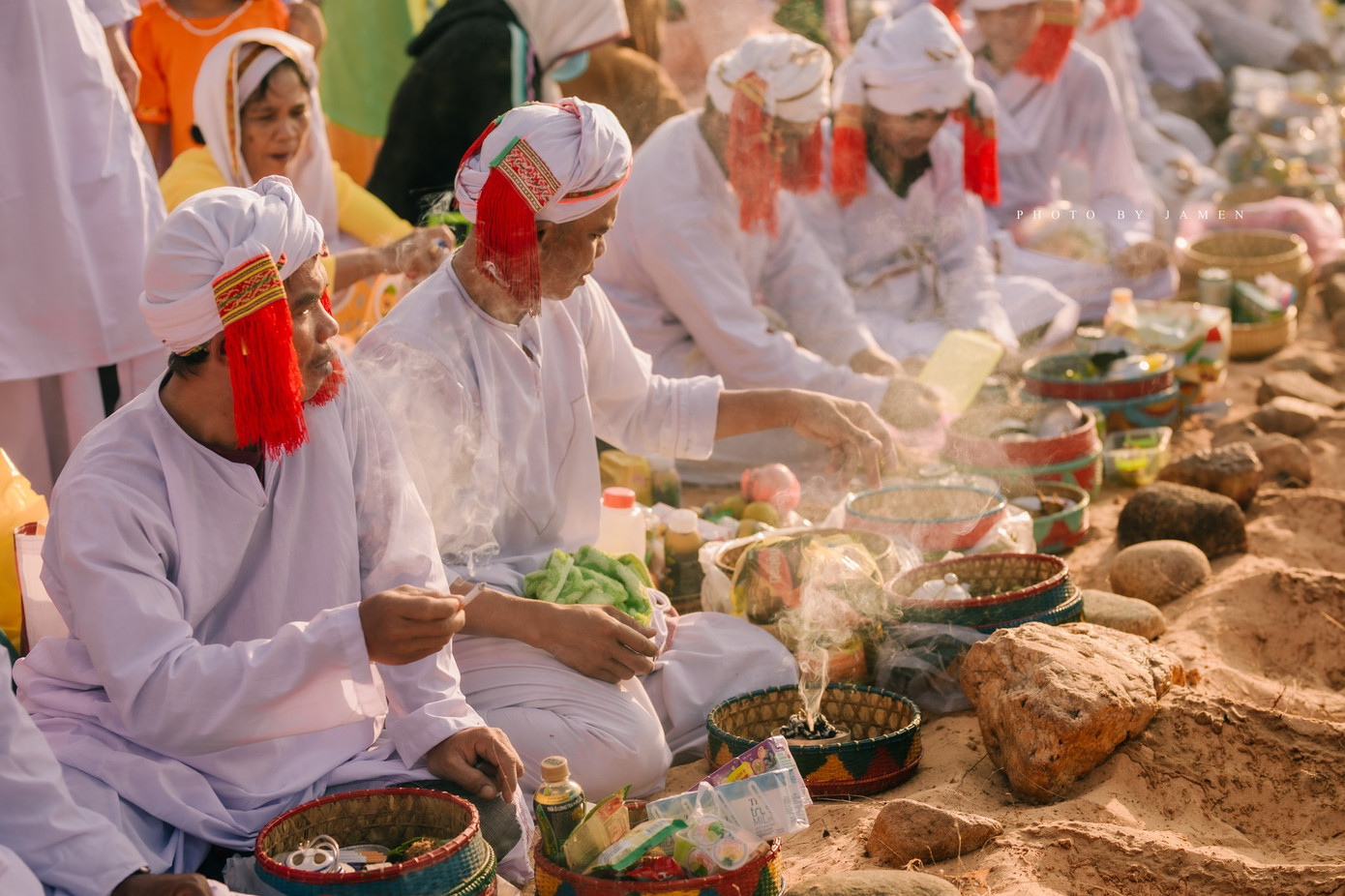
Bani Islam - sometimes called “Cham Bani” - is a unique local form of Islam practiced mainly in Ninh Thuận and Bình Thuận provinces. It’s technically influenced by Islam, but:
- Bani followers don’t follow all Islamic pillars
- Cham Bani practice Islam in a matrilineal system
- The Qur’an is not fully practiced
- Daily prayers may be symbolic or adapted
- Ramadan is observed differently
- Rituals mix Islamic elements with ancient Cham traditions
It’s like watching how a global religion transforms when it meets centuries of local culture.
What about global Sunni Islam?
You’ll still find Sunni Muslim communities - especially in An Giang, Ho Chi Minh City, Dong Nai, and small pockets in the Mekong Delta. These communities follow mainstream Islamic practices more closely, with imams, structured prayers, and regular Friday services.
So basically:
- Cham Bani → culturally blended, very local
- Cham Sunni + foreign Muslim communities → closer to international Islamic practice
Both coexist and add different layers to the story of Islam in Vietnam.
Where You Can Find Muslim Communities in Vietnam
Islam might not be everywhere, but the places where it exists? They’re vibrant, warm, and full of personality. If you want to explore or connect with Muslim communities, here’s where to go:
1. An Giang Province (Mekong Delta)
This is Vietnam’s largest Muslim hub - especially around Châu Đốc, Chợ Mới, and Tân Châu. The Cham villages here sit along the rivers and are home to beautiful mosques, colorful traditional outfits, and tight-knit Islamic communities.
2. Ninh Thuận & Bình Thuận
Welcome to the heart of Bani Islam. These coastal provinces still carry the ancient Cham cultural spirit. Festivals, rituals, and mosques here are unlike anywhere else in the world.
3. Ho Chi Minh City (Saigon)
Ho Chi Minh City is the most multicultural city in Vietnam, and its Muslim community reflects that diversity. Here, you’ll meet Cham Muslims from the south, along with people from Malaysia, Indonesia, India, and several Middle Eastern countries. Many come for work, business, or study, creating a mix of cultures that gives Saigon’s mosques and halal restaurants a lively, international atmosphere
Mosques to Visit in Vietnam
If you’re into architecture, culture, or just want peaceful places to chill, the mosques in Vietnam offer something special - especially the Cham mosques in the south.
1. Masjid Jamiul Azhar - An Giang
.webp)
Address: Chau Giang, Chau Phong, An Giang
A striking white-and-green Cham mosque by the river with stunning geometric patterns. Super photogenic.
2. Mubarak Mosque - An Giang
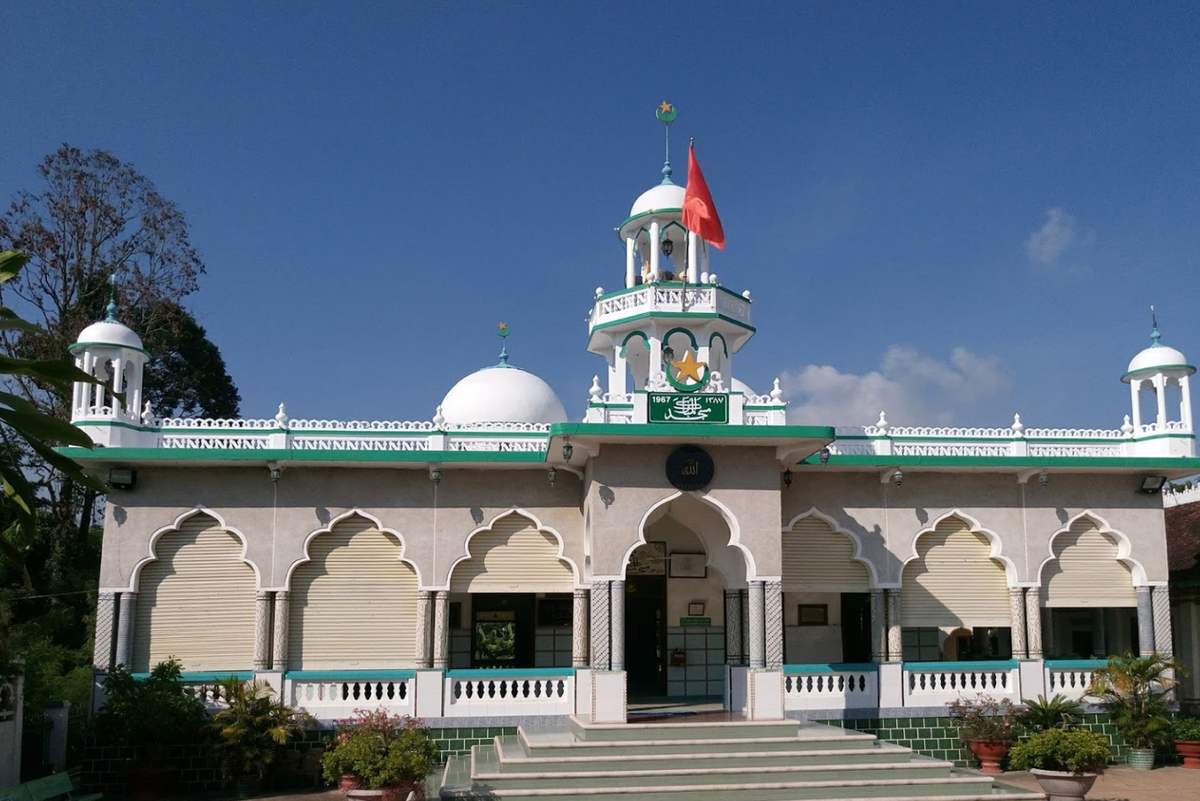
Address: Chau Phong, Tan Giang, An Giang
One of the oldest mosques in Vietnam, dating back to the 18th century. It’s the cultural heart of the Cham Muslim community, designed by Indian architect Mohamed Amin.
3. Al Rahim Mosque

Address: 45 Nam Ky Khoi Nghia, District 1, Ho Chi Minh City
Built with help from the Indonesian government, this mosque is central, welcoming, and often hosts Muslim travelers.
4. Jamia Al-Musulman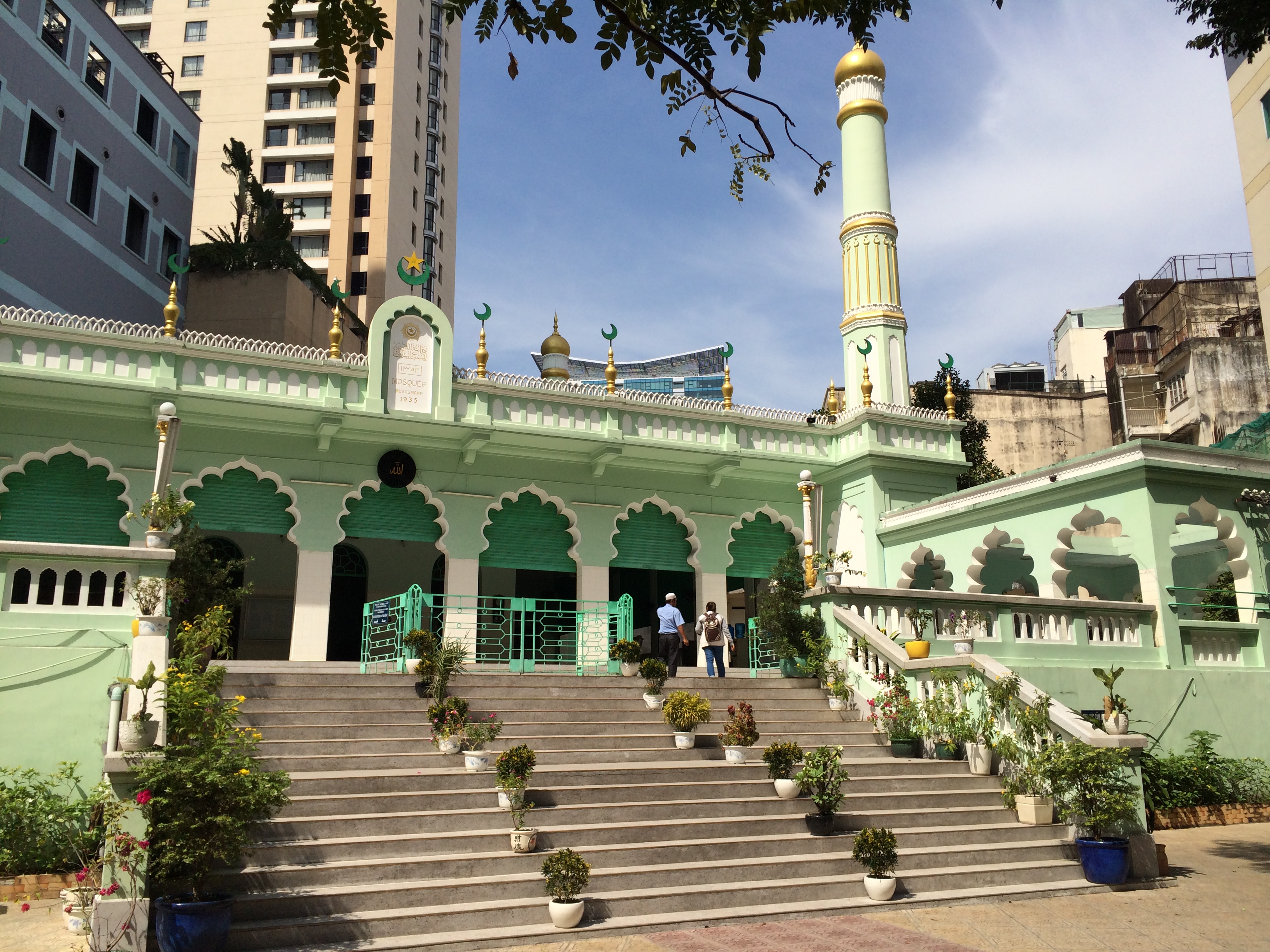
Address: 66 Dong Du, district 1, Ho Chi Minh City
Located in the heart of Ho Chi Minh City, the Saigon Central Mosque, also known as Jamia Al-Musulman Masjid - is one of the city’s most important religious and cultural landmarks, with origins tracing back to the early 1930s. It was first established by South Indian Muslim traders to serve the growing Muslim community in the area. Over the decades, it has become a diverse and welcoming center of worship, attracting Malays, Indonesians, Cham Muslims, and international visitors from across the world. Today, it stands as a symbol of Saigon’s multicultural heritage and the long-standing presence of its Muslim population.
Halal Restaurants in Ho Chi Minh City
If you’re Muslim and visiting Vietnam, you’ve got to check out the halal food scene, especially in Saigon. The city’s a real melting pot, and its halal restaurants bring together flavors from Muslim communities around the world.
Here are some popular halal spots:
1. Halal @ Saigon
Address: 31 Dong Du, Sai Gon Ward, Ho Chi Minh
Working time: 10.00-22.00
Modern, cozy, and known for a wide halal menu.
2. Pho Muslim
Address: 41 Nguyen An Ninh, Ben Thanh Ward, Ho Chi Minh
Working time: 06.00-13.00 & 16.00-00.00
Run by a local Cham Muslim family. Famous for halal pho and bò kho.
3. The Daun Restaurant
Address: 48 Le Lai, Ben Thanh Ward, Ho Chi Minh
Working time: 12.00-22.00
4. Basiroh
Address: 33 Nguyen An Ninh, Ben Thanh Ward, Ho Chi Minh
Working time: 07.00-22.00
Run by a Cham Muslim woman, the restaurant is named after her and primarily serves Malaysian and Indonesian cuisine
5. Taj Mahal
Address: 241-265/1 Pham Ngu Lao, Ben Thanh Ward, Ho Chi Minh
Working time: 10.30-22.30
A long-time favorite Indian halal restaurant.
Pro tip: District 1 is the easiest area for halal food, and many restaurants are less than 10 minutes apart.
Conclusion
Vietnam’s Islamic story is small in numbers but huge in cultural richness. It stretches from ancient Cham kingdoms to riverside mosques in the Mekong Delta.
If you’re the kind of traveler who loves understanding the “hidden layers” of a place, diving into Islam in Vietnam will seriously level up your trip. You’ll meet welcoming people, try amazing food, and experience a side of Vietnam most tourists never even hear about.
Whenever you’re ready to explore, just go with an open mind - the stories here will surprise you in the best way.
Other tips
- Ho Chi Minh City: A Global Melting Pot of Cultures on a Plate
- Essential Vietnamese Lunar New Year Decorations for Your Home
- Vietnam Symbolism: The Soul, Identity, and Resilience of the S-Shaped Land
- Vietnamese Dragon: Meaning, Legend & Cultural Identity
- Islam in Vietnam: Distinct from the Rest of the World
- Cyclo Vietnam: The Insider Guide to Vietnam’s Most Iconic Pedicab Experience
- Is the Water Puppet Show Worth It? An Honest Review & Deep Dive into Vietnamese Water Puppets History
- Celebrating Mid-Autumn Festival in Vietnam 2025 | The Ho Chi Minh City Insider's Guide
- What's happening on September 2nd in Vietnam? Vespa A Go Go Explains It All!
- Vietnam Independence Day: 80 Years. One Unforgettable Celebration
- Beyond the Sights: An Insider’s Guide to the Soulful Music of Vietnam
